Summary
- Magnesium is an essential micronutrient that can increase both total and free testosterone.
- Two-thirds of people don't reach the RDA for magnesium, around half consume an inadequate amount, and one fifth have a detectable deficiency.
- Spinach, dark chocolate, and avocado are good sources of magnesium.
- Magnesium glycinate and bisglycinate appear to have slightly better absorption and tolerability than the other forms used in supplements.
Background
There is growing evidence to support the importance of vitamins and minerals, particularly in the generation of testosterone.
Magnesium is an essential mineral that plays a role in over 300 enzyme systems that regulate diverse reactions within the body.[1] These include, but are not limited to, protein synthesis, muscle function, bone development, antioxidant production, heart health, brain activity, and of course, hormone levels.
Magnesium is also an electrolyte – meaning it dissolves in water, carries an electrical current, and is involved in hydration.
Despite the importance of dietary magnesium, we don't eat enough:
This has led to the US Government labelling magnesium a "shortfall nutrient".[4]
What about deficiency rates, because inadequacies turn into deficiencies? Well, this is a contentious point. The rates are generally lower, between 10–30%.[5] The gap between the inadequacy and deficiency rates is primarily explained by two issues surrounding the measurement of magnesium levels.
First, magnesium deficiency is typically measured through a blood test. While blood tests are used to measure most micronutrient deficiencies, they are considered inaccurate in the case of magnesium, as only 1% of the magnesium in our bodies is found in the blood.[6]
Second, the threshold for deficiency (<0.75mmol/L) is often considered to be too low, with levels as high as 0.82mmol/L accompanying magnesium deficiency symptoms in certain individuals.[5]
What are the consequences of this inadequacy or deficiency? Muscular dysfunction such as weakness, cramps, and soreness;[7] mood dysregulation such as increased levels of anxiety and depression;[8][9] and a greater risk of cardiovascular disease and death.[10] In fact, recent American research on stroke survivors found that those with higher magnesium intakes had a 40% lower all-cause mortality rate.[11]
If that's not enough to convince you to up your magnesium intake, wait until you hear what deficiency does to testosterone.
Animal Studies
Let's look at the animal research first.
Rats with an induced magnesium deficiency had around one-third of the testosterone and DHTDihydrotestosterone: a more potent androgen that the body makes from testosterone. that their magnesium-fuelled buddies had.[12]
Indian research uncovered a dose-dependent relationship between magnesium supplementation and testosterone production in male rats, meaning the more magnesium they were given, the higher their testosterone.[13] Those given the highest mega-dose (1700mg elemental magnesium human equivalent dose) had around 12% more testosterone after 13 days and 35% more testosterone after 26.
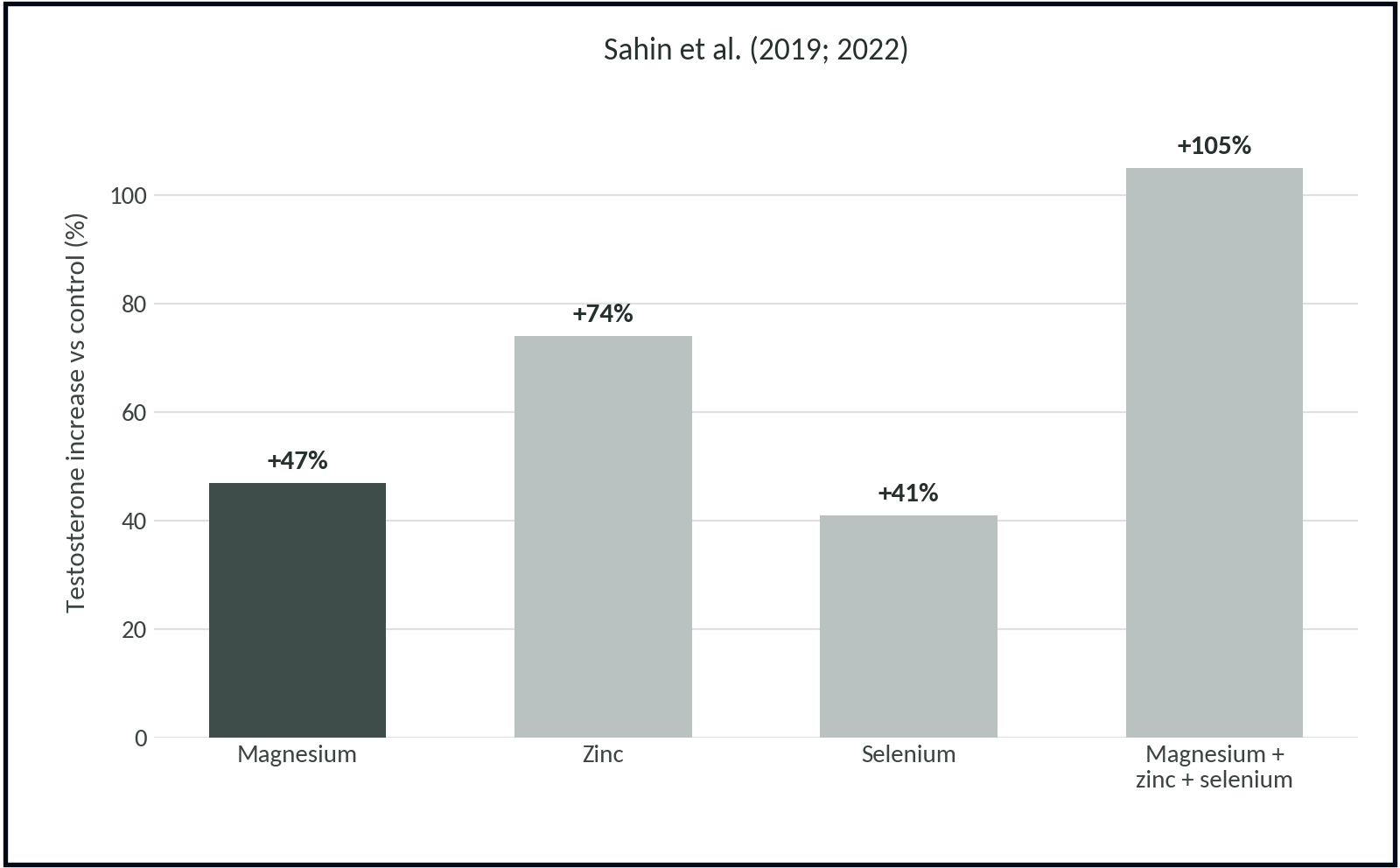
Turkish researchers found near identical results when investigating the impacts of magnesium, zinc, and selenium on testosterone in rats fed high-fat diets.[14][15] Note that the 2019 paper is a conference abstract rather than a full peer-reviewed study. The researchers had a control group, a magnesium group (100mg magnesium human equivalent dose), a zinc group (30mg zinc human equivalent dose), a selenium group (0.1mg selenium human equivalent dose), and various groups made up of combinations of each of the three micronutrients.
Across the studies, the magnesium groups had around 47% higher testosterone than the control group (zinc groups had 74% more, selenium groups had 41% more). The groups where rats were given combinations of these micronutrients had even higher testosterone levels. The magnesium + zinc + selenium groups had more than twice as much testosterone (105% more) as the control groups!
Human Studies
What about in humans?
Magnesium and Exercise
A Turkish study examined the impact of magnesium supplementation and exercise on testosterone in healthy male subjects.[16] It's kind of a long one, so if you can't be bothered reading the rest of this section, all you've got to know is that roughly 70mg of magnesium per day improved total and free testosteroneThe small fraction of testosterone not bound to proteins in the blood, and therefore available for your body to use., especially when paired with exercise.
Anyway, here are the details if you're still interested. The researchers had three groups in this four-week experiment. All three groups had their testosterone levels measured on the first day of the experiment and on the final one, and on both occasions had it measured before and after exercise (a beep test/shuttle run).
| Group | What they did |
|---|---|
| Group One | Received 10mg/kg/day of magnesium sulphate (a supplemental form that is roughly 10% magnesium). |
| Group Two | Did 1.5–2 hours of tae kwon do per day and were also given the magnesium supplement. |
| Group Three | Did the tae kwon do but did not take magnesium. |
Group Two had the highest total and free testosterone. They experienced a 7% increase in total T at rest and a 6% increase after exercise. Their free T gains were even better: 25% more at rest and 18% more after exercise.
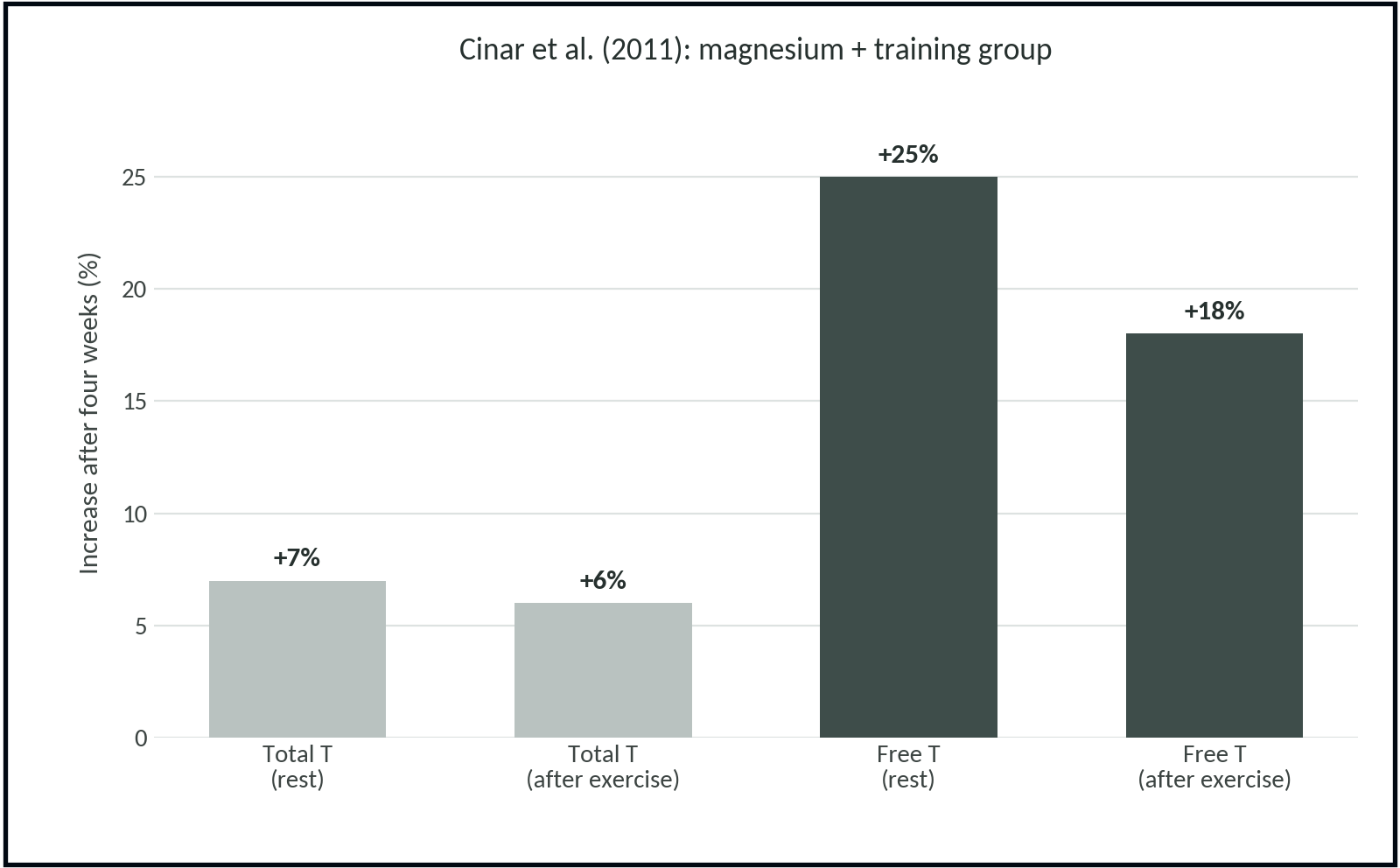
While the combination of exercise and magnesium supplementation was most effective in increasing test, Group One and Group Three also experienced increases to both total and free testosterone at rest and after exercise, ranging from 1–25%.
Magnesium, Zinc, and Vitamin B6
American athletes taking 450mg of magnesium aspartate, 30mg of zinc monomethionine aspartate, and 10.5mg of vitamin B6 each night for eight weeks raised their total testosterone by around 32% and their free testosterone by around 33%, while the placebo group's levels fell by about 10%.[17] They also had increased IGF-1Insulin-like growth factor 1: a hormone that drives muscle and tissue growth. levels and more strength than the placebo group. Of course, it's hard to tell how much of this was due to magnesium, but it is interesting, nonetheless.
Older Men
The last study I'll mention is a correlational one on older men.[18] This study found that higher circulating magnesium levels were associated with higher total testosterone. Magnesium was also correlated with IGF-1. These relationships held even when considering variables like age, BMI, and several others.
Mechanisms
How is magnesium doing all this?
| Mechanism | What magnesium does | Why it matters for testosterone |
|---|---|---|
| Reduces SHBG binding | A cell study found that magnesium inhibits the binding of total testosterone to SHBGSex hormone-binding globulin: a protein that binds testosterone in the blood, leaving it unavailable to your tissues..[19] | Less SHBG binding means more free testosterone – the type that really matters. |
| Steroidogenesis | Supports the enzymes involved in steroidogenesisThe process of making steroid hormones, including testosterone, from cholesterol..[13] | Steroidogenesis is how testosterone is created in the body. |
| Sleep | A systematic review of nine studies and over 7000 participants found that magnesium intake was associated with sleep quality.[20] | Sleep is crucial for testosterone production.[21] |
| Estrogen | Higher circulating magnesium levels are associated with lower estrogenThe main female sex hormone. Men make it too, mostly by converting testosterone. in women.[22][23] | Estrogen can impair testosterone levels by inhibiting luteinising hormoneLuteinising hormone: released by the pituitary gland, it signals the Leydig cells to produce testosterone. production.[24] |
| Hydration | As an electrolyte, it is vital for maintaining the balance of fluids in our bodies.[25] | Dehydration crushes testosterone.[26] |
| Cortisol | Supplementation reduces the stress hormone cortisolThe body's main stress hormone. Chronically high levels can suppress testosterone production..[27] | Cortisol and testosterone are inversely correlated.[28] |
| Oxidative stress | Rats given magnesium are protected from the increased oxidative stressAn imbalance between free radicals, which damage cells, and the antioxidants that neutralise them. and decreased testosterone associated with lithium consumption.[29] | Oxidative stress reduces testosterone.[30] |
| Mood | A 2023 meta-analysis of seven studies found that supplementation improves depression symptoms in adults.[9] | Depression symptoms and testosterone are inversely correlated.[31] |
| Exercise performance | A 2024 literature review found that supplementation reduced muscle soreness, improved performance and recovery, and was protective against muscle damage.[7] | Lifting weights gives you a test boost, especially when using bigger muscles.[32] |
| Blood pressure | A 2024 meta-analysis found that supplementation, especially above 400mg, reduces blood pressure.[33] | High blood pressure is associated with low testosterone levels.[34] |
| Vitamins B1 and D | Plays an important role in making vitamins B1 and D more bioavailableHow much of a nutrient your body can actually absorb and put to use. in the body.[35][36] | Vitamins B1 and D are both important for testosterone production.[37][38] |
Dosage
The RDA for adult males is 400–420mg per day.[1] However, some researchers have suggested this quantity is below the optimal daily dose, suggesting that individuals, especially those who engage in intense exercise, should have around 500mg per day.[7][39]
Here are some test-boosting sources of magnesium:
| Food | Serve | % DVDaily Value: a reference amount set by the US Food and Drug Administration for nutrition labels. |
|---|---|---|
| Spinach | Half a cup | 19% |
| Dark chocolate | 28g | 15% |
| Avocado | One medium avocado | 14% |
| Peanut butter | Two tablespoons | 12% |
However, as you can see above, those magnesium-rich foods contain less than 20% of the RDA per serve. It's no wonder so many people don't eat enough magnesium.
To get around this, many people choose supplementation. Most forms are considered effective, especially the organic forms like magnesium citrate and glycinate, with glycinate being particularly effective at improving sleep quality while incurring fewer side effects.[40]
Water, Stress, and Sweat
In the '90s, Swedish researchers discovered that the "magnesium in water is more readily absorbed than magnesium in food".[41] Tap water contains around 5% of the RDA for magnesium.[42] Tap water can also carry trace contaminants – microplastics, pesticides, and pharmaceutical residues among them – and some of these are classed as endocrine disruptorsChemicals that interfere with the body's hormone systems., though the levels found in treated drinking water and what they mean for human hormones are still debated.[43]
I filter my water to remove these, but unfortunately in doing so, I'm also removing up to 90% of its magnesium, at least when the filters are fresh.[42] We also lose magnesium from stress and anxiety, with British university students excreting an extra 37mg per day during exam week.[44]
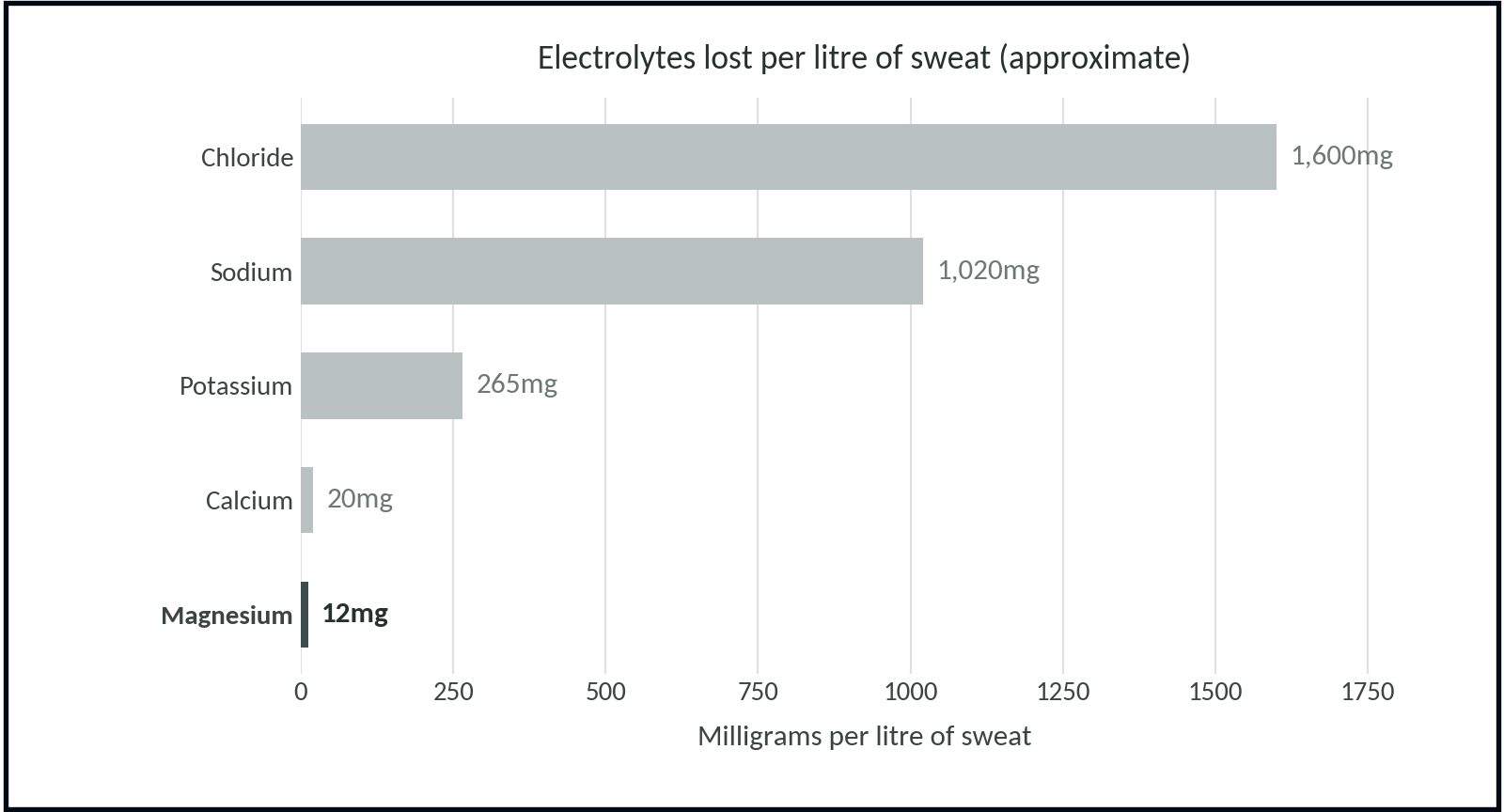
Sweat also increases magnesium loss. Per litre of sweat we lose approximately 1600mg of chloride,[45] 1020mg of sodium,[46] 265mg of potassium,[47] 20mg of calcium,[48] and 12mg of magnesium,[49] which ends up being about 24mg of magnesium per day (if you're relatively active, you can expect to lose two litres of sweat per day). Oh, and if you've had caffeine before a sweaty session, you're going to lose even more.[50]
To make up for these losses, I add a magnesium-rich electrolyte powder to my filtered water at least once a day and also take magnesium glycinate before bed.
Magnesium and the Other Electrolytes
While we're on the topic of electrolytes, adequate magnesium helps us to achieve adequate potassium. Potassium requires magnesium for absorption,[51] magnesium deficiencies worsen potassium deficiencies and render potassium supplementation ineffective, and more than 50% of people who are deficient in potassium are also deficient in magnesium.[52]
Sometimes people worry about taking magnesium with calcium because they bind to the same receptors, but recent research has demonstrated that taking as much as 1000mg of calcium did not impair magnesium absorption.[53]
People also worry about the side effects of supplementation. These include nausea, stomach pain, and diarrhea. However, these are generally associated with either poor quality forms of supplementation, like magnesium carbonate, chloride, and oxide, or with supplemental doses above 350mg.[54]
Conclusion
Magnesium is easily in my top five micronutrients for testosterone and general health. It can increase both total and free testosterone in animal and human subjects, plays a role in muscular performance, and has countless other health benefits. Unfortunately, there's a 20% chance you're deficient, a 50% chance you have an inadequacy, and a 70% chance you're consuming less than what is optimal. Dietary changes and supplementation can help to boost your magnesium levels and, in doing so, optimise your testosterone production.
Andregen utilises contemporary scientific research to provide first-rate information and unparalleled supplements that support health and optimise testosterone.
References
- Office of Dietary Supplements. (2022, March 29). Magnesium: Fact sheet for health professionals. National Institutes of Health. https://ods.od.nih.gov/factsheets/Magnesium-HealthProfessional/ ↩
- Liu, J., Huang, Y., Dai, Q., Fulda, K. G., Chen, S., & Tao, M.-H. (2019). Trends in magnesium intake among Hispanic adults, the National Health and Nutrition Examination Survey (NHANES) 1999–2014. Nutrients, 11(12), 2867. https://doi.org/10.3390/nu11122867 ↩
- Reider, C. A., Chung, R.-Y., Devarshi, P. P., Grant, R. W., & Hazels Mitmesser, S. (2020). Inadequacy of immune health nutrients: Intakes in US adults, the 2005–2016 NHANES. Nutrients, 12(6), 1735. https://doi.org/10.3390/nu12061735 ↩
- Millen, B. E., Abrams, S., Adams-Campbell, L., Anderson, C. A. M., Brenna, J. T., Campbell, W. W., Clinton, S., Hu, F., Nelson, M., Neuhouser, M. L., Pérez-Escamilla, R., Siega-Riz, A. M., Story, M., & Lichtenstein, A. H. (2016). The 2015 Dietary Guidelines Advisory Committee scientific report: Development and major conclusions. Advances in Nutrition, 7(3), 438–444. https://doi.org/10.3945/an.116.012120 ↩
- Costello, R. B., Elin, R. J., Rosanoff, A., Wallace, T. C., Guerrero-Romero, F., Hruby, A., Lutsey, P. L., Nielsen, F. H., Rodriguez-Moran, M., Song, Y., & Van Horn, L. V. (2016). Perspective: The case for an evidence-based reference interval for serum magnesium: The time has come. Advances in Nutrition, 7(6), 977–993. https://doi.org/10.3945/an.116.012765 ↩
- Ismail, A. A. A., Ismail, Y., & Ismail, A. A. (2018). Chronic magnesium deficiency and human disease; time for reappraisal? QJM: An International Journal of Medicine, 111(11), 759–763. https://doi.org/10.1093/qjmed/hcx186 ↩
- Tarsitano, M. G., Quinzi, F., Folino, K., Greco, F., Oranges, F. P., Cerulli, C., & Emerenziani, G. P. (2024). Effects of magnesium supplementation on muscle soreness in different type of physical activities: A systematic review. Journal of Translational Medicine, 22(1), 629. https://doi.org/10.1186/s12967-024-05434-x ↩
- Boyle, N. B., Lawton, C., & Dye, L. (2017). The effects of magnesium supplementation on subjective anxiety and stress—A systematic review. Nutrients, 9(5), 429. https://doi.org/10.3390/nu9050429 ↩
- Moabedi, M., Aliakbari, M., Erfanian, S., & Milajerdi, A. (2023). Magnesium supplementation beneficially affects depression in adults with depressive disorder: A systematic review and meta-analysis of randomized clinical trials. Frontiers in Psychiatry, 14, 1333261. https://doi.org/10.3389/fpsyt.2023.1333261 ↩
- DiNicolantonio, J. J., O'Keefe, J. H., & Wilson, W. (2018). Subclinical magnesium deficiency: A principal driver of cardiovascular disease and a public health crisis. Open Heart, 5(1), e000668. https://doi.org/10.1136/openhrt-2017-000668 ↩
- Wang, M., Peng, J., Yang, C., Zhang, W., Cheng, Z., & Zheng, H. (2023). Magnesium intake and all-cause mortality after stroke: A cohort study. Nutrition Journal, 22(1), 54. https://doi.org/10.1186/s12937-023-00886-1 ↩
- Barbier, A., Planchenault, C., Vernhet, C., & Breliere, J. C. (1986). Magnesium-deficient hairless rat: Spleen cells mitogenic responses and variations in hormonal status. Agents and Actions, 19(5–6), 341–343. https://doi.org/10.1007/BF01971246 ↩
- Chandra, A. K., Sengupta, P., Goswami, H., & Sarkar, M. (2013). Effects of dietary magnesium on testicular histology, steroidogenesis, spermatogenesis and oxidative stress markers in adult rats. Indian Journal of Experimental Biology, 51(1), 37–47. https://pubmed.ncbi.nlm.nih.gov/23441478/ ↩
- Sahin, K., Orhan, C., Tuzcu, M., Sahin, N., Sylla, S., Ojalvo, S. P., & Komorowski, J. (2019). The effect of magnesium, zinc, and selenium, used alone or in combination, on strength and anabolic hormone levels in rats [Conference abstract]. The FASEB Journal, 33(S1), 839.7. https://doi.org/10.1096/fasebj.2019.33.1_supplement.839.7 ↩
- Sahin, K., Orhan, C., Kucuk, O., Tuzcu, M., Sahin, N., Ozercan, I. H., Sylla, S., Ojalvo, S. P., & Komorowski, J. R. (2022). Effects of magnesium picolinate, zinc picolinate, and selenomethionine co-supplementation on reproductive hormones, and glucose and lipid metabolism-related protein expressions in male rats fed a high-fat diet. Food Chemistry: Molecular Sciences, 4, 100081. https://doi.org/10.1016/j.fochms.2022.100081 ↩
- Cinar, V., Polat, Y., Baltaci, A. K., & Mogulkoc, R. (2011). Effects of magnesium supplementation on testosterone levels of athletes and sedentary subjects at rest and after exhaustion. Biological Trace Element Research, 140(1), 18–23. https://doi.org/10.1007/s12011-010-8676-3 ↩
- Brilla, L. R., & Conte, V. (2000). Effects of a novel zinc–magnesium formulation on hormones and strength. Journal of Exercise Physiology Online, 3(4). https://asep.org/asep/asep/BrillaV2.PDF ↩
- Maggio, M., Ceda, G. P., Lauretani, F., Cattabiani, C., Avantaggiato, E., Morganti, S., Ablondi, F., Bandinelli, S., Dominguez, L. J., Barbagallo, M., Paolisso, G., Semba, R. D., & Ferrucci, L. (2011). Magnesium and anabolic hormones in older men. International Journal of Andrology, 34(6 Pt 2), e594–e600. https://doi.org/10.1111/j.1365-2605.2011.01193.x ↩
- Excoffon, L., Guillaume, Y. C., Woronoff-Lemsi, M. C., & André, C. (2009). Magnesium effect on testosterone–SHBG association studied by a novel molecular chromatography approach. Journal of Pharmaceutical and Biomedical Analysis, 49(2), 175–180. https://doi.org/10.1016/j.jpba.2008.10.041 ↩
- Arab, A., Rafie, N., Amani, R., & Shirani, F. (2023). The role of magnesium in sleep health: A systematic review of available literature. Biological Trace Element Research, 201(1), 121–128. https://doi.org/10.1007/s12011-022-03162-1 ↩
- Leproult, R., & Van Cauter, E. (2011). Effect of 1 week of sleep restriction on testosterone levels in young healthy men. JAMA, 305(21), 2173–2174. https://doi.org/10.1001/jama.2011.710 ↩
- Muneyyirci-Delale, O., Nacharaju, V. L., Dalloul, M., Altura, B. M., & Altura, B. T. (1999). Serum ionized magnesium and calcium in women after menopause: Inverse relation of estrogen with ionized magnesium. Fertility and Sterility, 71(5), 869–872. https://doi.org/10.1016/S0015-0282(99)00065-5 ↩
- Muneyyirci-Delale, O., Nacharaju, V. L., Altura, B. M., & Altura, B. T. (1998). Sex steroid hormones modulate serum ionized magnesium and calcium levels throughout the menstrual cycle in women. Fertility and Sterility, 69(5), 958–962. https://doi.org/10.1016/S0015-0282(98)00053-3 ↩
- Strobl, F. J., & Levine, J. E. (1988). Estrogen inhibits luteinizing hormone (LH), but not follicle-stimulating hormone secretion in hypophysectomized pituitary-grafted rats receiving pulsatile LH-releasing hormone infusions. Endocrinology, 123(1), 622–630. https://doi.org/10.1210/endo-123-1-622 ↩
- Ahmed, F., & Mohammed, A. (2019). Magnesium: The forgotten electrolyte—A review on hypomagnesemia. Medical Sciences, 7(4), 56. https://doi.org/10.3390/medsci7040056 ↩
- Yildirim, I. (2015). Associations among dehydration, testosterone and stress hormones in terms of body weight loss before competition. The American Journal of the Medical Sciences, 350(2), 103–108. https://doi.org/10.1097/MAJ.0000000000000521 ↩
- Schutten, J. C., Joris, P. J., Minović, I., Post, A., van Beek, A. P., de Borst, M. H., Mensink, R. P., & Bakker, S. J. L. (2021). Long-term magnesium supplementation improves glucocorticoid metabolism: A post-hoc analysis of an intervention trial. Clinical Endocrinology, 94(2), 150–157. https://doi.org/10.1111/cen.14350 ↩
- Ullah, R., Naz, R., Batool, A., Wazir, M., Rahman, T. U., Nabi, G., Wahab, F., Fu, J., & Shahab, M. (2021). RF9 rescues cortisol-induced repression of testosterone levels in adult male macaques. Frontiers in Physiology, 12, 630796. https://doi.org/10.3389/fphys.2021.630796 ↩
- Shoghi, E., Miri, S., Maghool, F., Niazi, A. A., Fanaei, H., Niyazi, P., Chahkandi, M., Parsi-Mood, A., Bagheri, H., & Safari, T. (2024). Do exercise and magnesium sulfate improve infertility caused by lithium carbonate in male rats? Advanced Biomedical Research, 13, 110. https://doi.org/10.4103/abr.abr_216_23 ↩
- Liu, J., Ma, C., Leng, Y., Qin, J., & Zhang, P. (2025). Association between the oxidative balance score and testosterone deficiency: A cross-sectional study of the NHANES, 2011–2016. Scientific Reports, 15, 8040. https://doi.org/10.1038/s41598-025-92934-5 ↩
- Kheirkhah, F., Hosseini, S. R., Hosseini, S. F., Ghasemi, N., Bijani, A., & Cumming, R. G. (2014). Relationship between testosterone levels and depressive symptoms in older men in Amirkola, Iran. Caspian Journal of Internal Medicine, 5(2), 65–70. https://pubmed.ncbi.nlm.nih.gov/24778779/ ↩
- Hansen, S., Kvorning, T., Kjær, M., & Sjøgaard, G. (2001). The effect of short-term strength training on human skeletal muscle: The importance of physiologically elevated hormone levels. Scandinavian Journal of Medicine & Science in Sports, 11(6), 347–354. https://doi.org/10.1034/j.1600-0838.2001.110606.x ↩
- Alharran, A. M., Alzayed, M. M., Jamilian, P., Prabahar, K., Kamal, A. H., Alotaibi, M. N., Elshaer, O. E., Alhatm, M., Masmoum, M. D., Hernández-Wolters, B., Sindi, R., Kord-Varkaneh, H., & Abu-Zaid, A. (2024). Impact of magnesium supplementation on blood pressure: An umbrella meta-analysis of randomized controlled trials. Current Therapeutic Research, 101, 100755. https://doi.org/10.1016/j.curtheres.2024.100755 ↩
- Wei, D., Hou, J., Liu, X., Zhang, L., Wang, L., Liu, P., Fan, K., Zhang, L., Nie, L., Xu, Q., Wang, J., Song, Y., Wang, M., Liu, X., Huo, W., Yu, S., Li, L., Jing, T., Wang, C., & Mao, Z. (2021). Interaction between testosterone and obesity on hypertension: A population-based cross-sectional study. Atherosclerosis, 330, 14–21. https://doi.org/10.1016/j.atherosclerosis.2021.06.906 ↩
- Lonsdale, D. (2015). Thiamine and magnesium deficiencies: Keys to disease. Medical Hypotheses, 84(2), 129–134. https://doi.org/10.1016/j.mehy.2014.12.004 ↩
- Dai, Q., Zhu, X., Manson, J. E., Song, Y., Li, X., Franke, A. A., Costello, R. B., Rosanoff, A., Nian, H., Fan, L., Murff, H., Ness, R. M., Seidner, D. L., Yu, C., & Shrubsole, M. J. (2018). Magnesium status and supplementation influence vitamin D status and metabolism: Results from a randomized trial. The American Journal of Clinical Nutrition, 108(6), 1249–1258. https://doi.org/10.1093/ajcn/nqy274 ↩
- Hassan, M. H., Awadalla, E. A., Ali, R. A., Fouad, S. S., & Abdel-Kahaar, E. (2020). Thiamine deficiency and oxidative stress induced by prolonged metronidazole therapy can explain its side effects of neurotoxicity and infertility in experimental animals: Effect of grapefruit co-therapy. Human & Experimental Toxicology, 39(6), 834–847. https://doi.org/10.1177/0960327119867755 ↩
- Abu-Zaid, A., Saleh, S. A. K., Adly, H. M., Baradwan, S., Alharran, A. M., Alhatm, M., Alzayed, M. M., Alotaibi, M. N., Saad, A. R., Alfayadh, H. M., Abuzaid, M., & Alomar, O. (2024). The impact of vitamin D on androgens and anabolic steroids among adult males: A meta-analytic review. Diseases, 12(10), 228. https://doi.org/10.3390/diseases12100228 ↩
- Maggio, M., De Vita, F., Lauretani, F., Nouvenne, A., Meschi, T., Ticinesi, A., Dominguez, L. J., Barbagallo, M., Dall'Aglio, E., & Ceda, G. P. (2014). The interplay between magnesium and testosterone in modulating physical function in men. International Journal of Endocrinology, 2014, 525249. https://doi.org/10.1155/2014/525249 ↩
- Pardo, M. R., Garicano Vilar, E., San Mauro Martín, I., & Camina Martín, M. A. (2021). Bioavailability of magnesium food supplements: A systematic review. Nutrition, 89, 111294. https://doi.org/10.1016/j.nut.2021.111294 ↩
- Rubenowitz, E., Axelsson, G., & Rylander, R. (1998). Magnesium in drinking water and body magnesium status measured using an oral loading test. Scandinavian Journal of Clinical and Laboratory Investigation, 58(5), 423–428. https://doi.org/10.1080/00365519850186409 ↩
- Kwiatkowski, H., Kreft, K., Ronda, O., & Cieślik, B. M. (2024). The effect of using jug-type water filters on selected metals concentration in tap water—A case study. Journal of Water and Health, 22(7), 1261–1270. https://iwaponline.com/jwh/article/22/7/1261/102807/The-effect-of-using-jug-type-water-filters-on ↩
- Gonsioroski, A., Mourikes, V. E., & Flaws, J. A. (2020). Endocrine disruptors in water and their effects on the reproductive system. International Journal of Molecular Sciences, 21(6), 1929. https://doi.org/10.3390/ijms21061929 ↩
- Grases, G., Pérez-Castelló, J. A., Sanchis, P., Casero, A., Perelló, J., Isern, B., Rigo, E., & Grases, F. (2006). Anxiety and stress among science students: Study of calcium and magnesium alterations. Magnesium Research, 19(2), 102–106. https://pubmed.ncbi.nlm.nih.gov/16955721/ ↩
- Baker, L. B., De Chavez, P. J. D., Ungaro, C. T., Sopeña, B. C., Nuccio, R. P., Reimel, A. J., & Barnes, K. A. (2019). Exercise intensity effects on total sweat electrolyte losses and regional vs. whole-body sweat [Na+], [Cl−], and [K+]. European Journal of Applied Physiology, 119(2), 361–375. https://doi.org/10.1007/s00421-018-4048-z ↩
- Ranchordas, M. K., Tiller, N. B., Ramchandani, G., Jutley, R., Blow, A., Tye, J., & Drury, B. (2017). Normative data on regional sweat-sodium concentrations of professional male team-sport athletes. Journal of the International Society of Sports Nutrition, 14, 40. https://doi.org/10.1186/s12970-017-0197-4 ↩
- Consolazio, C. F., Matoush, L. O., Nelson, R. A., Harding, R. S., & Canham, J. E. (1963). Excretion of sodium, potassium, magnesium and iron in human sweat and the relation of each to balance and requirements. The Journal of Nutrition, 79(4), 407–415. https://doi.org/10.1093/jn/79.4.407 ↩
- Consolazio, C. F., Matoush, L. O., Nelson, R. A., Hackler, L. R., & Preston, E. E. (1962). Relationship between calcium in sweat, calcium balance, and calcium requirements. The Journal of Nutrition, 78(1), 78–88. https://doi.org/10.1093/jn/78.1.78 ↩
- Baker, L. B., & Jeukendrup, A. E. (2014). Optimal composition of fluid-replacement beverages. Comprehensive Physiology, 4(2), 575–620. https://doi.org/10.1002/cphy.c130014 ↩
- Brouns, F., Kovacs, E. M., & Senden, J. M. (1998). The effect of different rehydration drinks on post-exercise electrolyte excretion in trained athletes. International Journal of Sports Medicine, 19(1), 56–60. https://doi.org/10.1055/s-2007-971881 ↩
- Palmer, B. F., & Clegg, D. J. (2019). Physiology and pathophysiology of potassium homeostasis: Core curriculum 2019. American Journal of Kidney Diseases, 74(5), 682–695. https://doi.org/10.1053/j.ajkd.2019.03.427 ↩
- Huang, C.-L., & Kuo, E. (2007). Mechanism of hypokalemia in magnesium deficiency. Journal of the American Society of Nephrology, 18(10), 2649–2652. https://doi.org/10.1681/ASN.2007070792 ↩
- Schuchardt, J. P., & Hahn, A. (2017). Intestinal absorption and factors influencing bioavailability of magnesium—An update. Current Nutrition and Food Science, 13(4), 260–278. https://doi.org/10.2174/1573401313666170427162740 ↩
- Institute of Medicine (US) Standing Committee on the Scientific Evaluation of Dietary Reference Intakes. (1997). Dietary reference intakes for calcium, phosphorus, magnesium, vitamin D, and fluoride. National Academies Press. https://doi.org/10.17226/5776 ↩